

The Industry of the future, also known as industry 4.0 and defined as the fourth industrial revolution, represents a major transformation in the manufacturing sector, and offers promising prospects for the future of industry.
Born in Germany, this industrial revolution is made possible by the integration of advanced technologies such as artificial intelligence (AI), the Internet of Things (IoT), big data, machine learning and many other emerging technologies.
By enabling intelligent interconnection and the digitalization of industrial processes, Industry 4.0 paves the way for significant improvements in productivity, energy efficiency and environmental sustainability.
However, behind this promising vision lie major challenges to be met. The implementation of this industrial revolution can be hindered by obstacles such as financial constraints, lack of technical skills or organizational constraints.
I] Understanding the concept as a whole
Industry 4.0 marks the convergence of the physical and digital worlds.
The combination of technologies promotes an interconnection of information that gives manufacturers time savings and stronger control of their value chain.
Industry 4.0 therefore enables increased automation of production processes, predictive maintenance to reduce equipment downtime, improved product quality and a reduction in manufacturing errors through the use of machine learning algorithms such as Machine Learning (ML).
In addition, the integration of high-tech IoT devices in smart factories makes it possible to increase productivity and improve product quality, while reducing production costs.
Industry 4.0 is not only a technological revolution, but it also has social, political and environmental implications. It raises the question of employment in a context where automation is taking up more and more space.
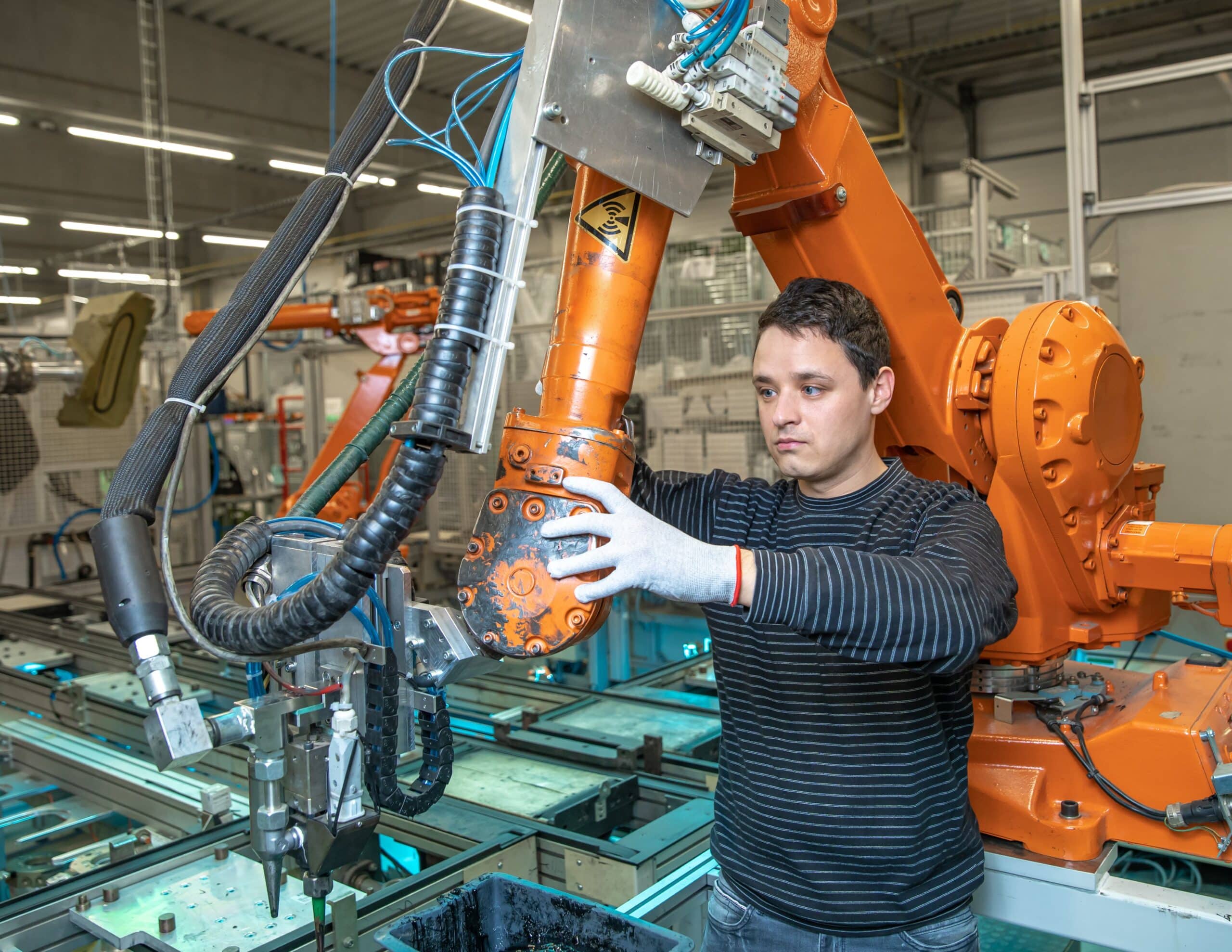
Supporting current employees and training future employees are major issues to take into account in this transformation. It is essential to reflect on the place of humans in this new way of producing.
II] Integrating digitalization into the company’s strategy
In the era of industry 4.0, digitalization occupies a central place in the modern company’s strategy. After understanding the overall concept of industry 4.0, it becomes essential for organizations to effectively integrate digitalization into their strategy to remain competitive in today’s market.
Industry 4.0 is characterized by the intelligent interconnection of all links in the production chain thanks to the various technologies mentioned above. This allows machines to produce autonomously through a Machine-to-Machine (M2M) protocol, and to adjust in real time according to demand, thus improving production efficiency and inventory management.
To integrate digitalization into their strategy, companies must take the following elements into account:
1. Define a clear vision: The first step in integrating digitalization into the company’s strategy is to define a clear vision of the objectives to be achieved. This involves understanding how digitalization can improve processes, increase operational efficiency, and meet customer expectations while keeping in mind the benefits and challenges of digital transformation.
2. Alignment with market needs: The integration of digitalization must be aligned with market needs and customer expectations. It is essential to understand how digital technologies can improve the customer experience, increase responsiveness to market demands and create a unique value proposition.
3. Invest in key technologies : To integrate digitalization effectively, companies must invest in the key technologies of industry 4.0, such as IoT, AI, data analytics and automation. These technologies provide the tools needed to collect and analyze data in real time, optimize production processes and improve decision-making.
4. Employee training and awareness: The integration of digitalization requires a cultural change within the company. Employees must be made aware of the importance of digital transformation and trained in new technologies so that they can use them optimally and actively contribute to the implementation of the digitalization strategy.
5. Integration into existing processes : Digitalization is not about completely replacing existing processes, but rather improving them by using digital technologies to make them more efficient and more agile. It is essential to integrate digitalization seamlessly into existing operations to optimize productivity and minimize disruption.
By effectively integrating digitalization into their strategy, companies can then benefit from many advantages, such as improved operational efficiency, product personalization, reduced production costs and better competitiveness on the market.
III] Training, transforming and uniting employees
The emergence of Industry 4.0 is a societal revolution that disrupts production methods, company hierarchies, skills and professions. To ensure a successful transition to this new industrial era, it is imperative to prepare and support employees in the face of unprecedented technological changes.

This involves training, the transformation of work practices, and employee buy-in to the changes.
1. Training : Raising employees’ qualifications is essential to anticipate and meet the challenges posed by Industry 4.0. Repetitive and dangerous tasks will give way to monitoring and process improvement missions, requiring specific skills. Digital reshapes work and requires advanced technical knowledge, in particular in programming, web development, data processing and collection and everything inherent to new technologies.
2. Transformation: Digital does not replace work, it reshapes it. Work organization is evolving towards new forms of cooperation and team self-regulation, requiring more autonomy and responsibility from employees. Their buy-in is essential, and for that, they must be involved in the management of transformations, in consultation with their representatives. The change of stance towards Industry 4.0 must be accompanied by a reinvention of existing professions and the emergence of new professions, requiring a qualified, competent workforce trained in new technologies.
3. Proper understanding and buy-in of employees: To successfully integrate Industry 4.0, it is essential that employees understand the stakes of this transformation. Communication and awareness are therefore paramount to generate buy-in and reduce resistance to change. Companies must provide clear information on the objectives, benefits and opportunities linked to Industry 4.0. This will make it possible to create an environment conducive to learning and to employees’ adaptation to new technologies and working methods.
4. Supply chain optimization : The interconnection of production systems also facilitates integration with supply chains and business partners. Real-time data on production, inventory and demand allow more efficient supply management, better synchronization of deliveries and reduced logistics costs. This contributes to a more agile and more responsive supply chain, which is essential to remain competitive on the global market.
IV] Guaranteeing interconnection at all levels of production
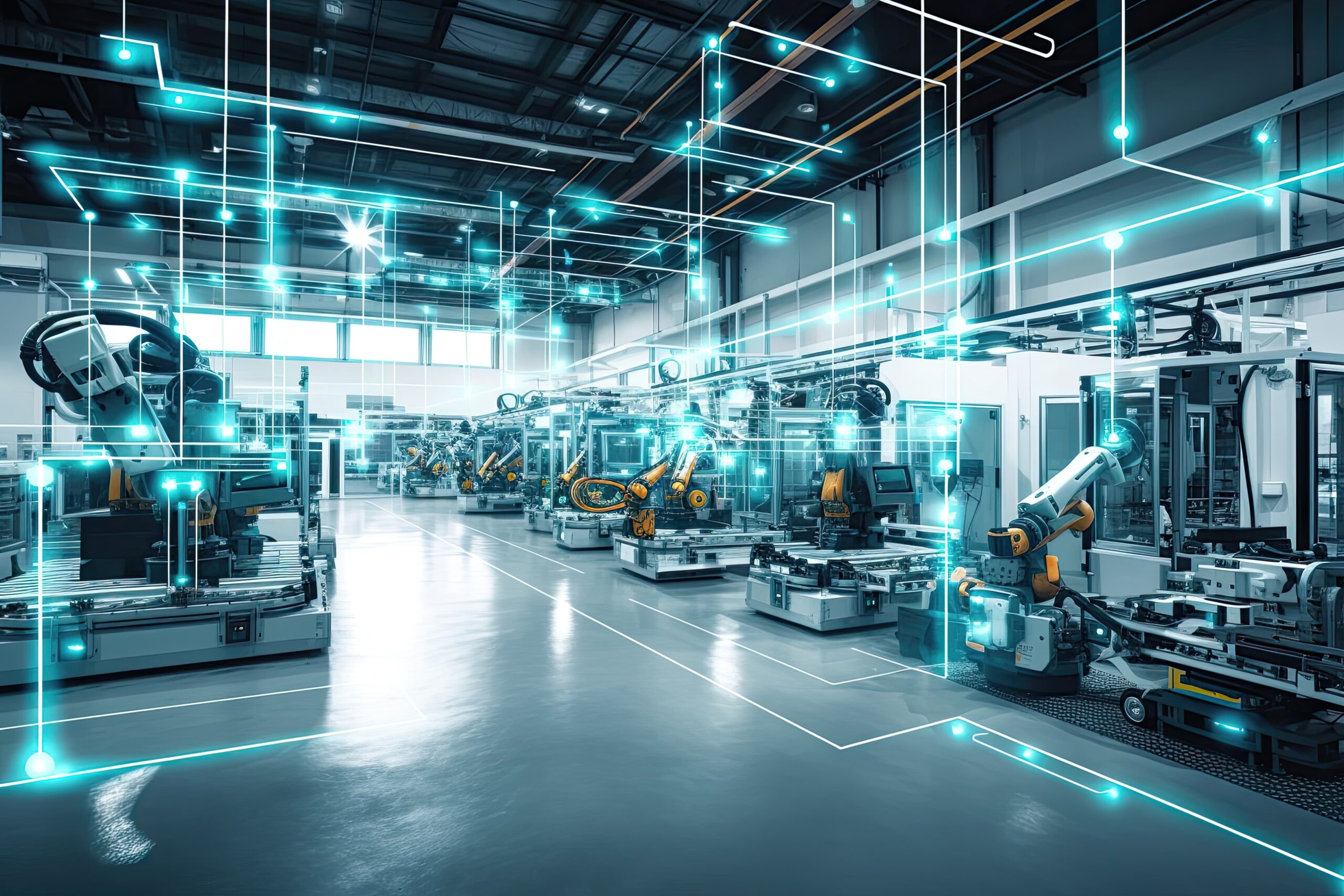
In Industry 4.0, guaranteeing interconnection at all levels of production is crucial to ensure the successful transformation of industrial companies.
This interconnection relies on the use of IoT, real-time data analysis, and the introduction of cyber-physical systems. Here are the reasons why this interconnection is necessary:
- Improved efficiency and productivity: The interconnection of production systems enables transparent, real-time communication between the different equipment, machines and operators. This makes it possible to optimize process coordination, quickly identify bottlenecks and production problems, and make informed decisions to improve overall efficiency. Real-time data also facilitate production planning and management, which makes it possible to better meet customer demand and increase overall productivity.
- Optimal decision-making: The interconnection of information systems (IS) and machines makes it possible to collect a massive quantity of data from different sources. This data is then analyzed in real time thanks to IoT and Big Data, which makes it possible to generate valuable information for decision-making. Leaders can thus have an overall view of production, identify trends, anticipate potential problems, and make decisions based on reliable and up-to-date data. This contributes to better responsiveness and more efficient production management.
- Increased personalization and flexibility: Interconnection at all levels of production makes it possible to create more flexible and adaptable production lines. Thanks to real-time analysis of customer data, companies can better understand consumers’ preferences and needs. This allows them to further personalize products and services to meet specific market demands. The increased flexibility in production also makes it possible to adapt quickly to changes in demand and to introduce new products more quickly.
- Supply chain optimization: The interconnection of production systems also facilitates integration with supply chains and business partners. Real-time data on production, inventory and demand allow more efficient supply management, better synchronization of deliveries and reduced logistics costs. This contributes to a more agile and more responsive supply chain, which is essential to remain competitive on the global market.
V] Managing and processing data in real time
In the context of industry 4.0, interconnection at all levels of production is of crucial importance to realize the full benefits of this fourth industrial revolution. However, successful interconnection cannot be achieved without effective management and agile processing of data in real time.
Indeed, setting up industry 4.0 in a company requires a solid infrastructure to collect, manage and analyze the data generated at each stage of the production process.
Managing and processing data in real time are essential elements to guarantee the proper functioning of industry 4.0 within a company.
Here is why this step is crucial:
1. Process optimization: Real-time collection and analysis of data from sensors, machines and systems within the factory allow an in-depth understanding of operations. This makes it possible to identify inefficiencies, bottlenecks and opportunities to optimize production processes. By adjusting production parameters in real time according to ongoing data, companies can improve efficiency, reduce downtime and minimize losses.
2. Predictive maintenance: Thanks to real-time monitoring of equipment and machines, the data collected make it possible to predict maintenance needs. Analysis models can anticipate potential breakdowns by detecting abnormal patterns in the data. This makes it possible to plan maintenance proactively, avoid unplanned stoppages and maximize equipment availability.
3. Production personalization: The ability to quickly collect and analyze data in real time allows companies to respond to changing customer demands and personalize production. By adjusting production parameters according to individual specifications, companies can provide tailor-made products while maintaining efficient production.
4. Quality improvement: Real-time analysis of production data makes it possible to quickly detect quality variations and identify potential defects. This allows companies to intervene immediately to correct problems, thus reducing scrap and improving the overall quality of products.
5. Informed decision-making: The availability of real-time data allows decision-makers to make informed, fact-based decisions. Real-time information provides continuous visibility on production performance, which allows leaders to react quickly to challenges and opportunities.
The successful integration of industry 4.0 into a company requires effective management and processing of data in real time. The ability to collect, analyze and exploit data from various sources throughout the production process is essential to optimize operations, improve quality, maintain predictive maintenance and respond agilely to market demands.
Real-time data is at the heart of the complete interconnection of systems and operations, allowing the company to fully realize the benefits of the fourth industrial revolution.
VI] Prioritizing cybersecurity and data protection
As industry 4.0 continues to transform companies by making them more interconnected and digital, prioritizing cybersecurity and data protection becomes an imperative necessity to guarantee the success and security of this transition.

The rise of industry 4.0 has led to an unprecedented convergence between information systems (IT) and operational systems (OT). However, this interconnection also presents security risks. Critical infrastructures, such as factories, power grids and distribution systems, are becoming potential targets for cyberattacks and malicious actors.
In the context of industry 4.0, where data flows in real time at all levels of production, prioritizing cybersecurity becomes crucial to protect this data against growing threats. Real-time data is a valuable asset, but it also becomes a prime target for cybercriminals.
Companies must implement proactive security measures to prevent cyberattacks, protect data integrity and guarantee business continuity. This involves setting up robust security controls, identity and access management, continuous monitoring of systems and raising employee awareness of best practices in IT security.
Data protection is a major concern in the context of industry 4.0.
Companies collect and process a massive quantity of data in real time to optimize operations, improve quality and make decisions based on in-depth analyses. However, this data is vulnerable to security breaches, leaks and theft.
Setting up advanced security protocols, such as data encryption, access monitoring and rigorous management of permissions, is essential to protect data against potential threats.
The importance of prioritizing cybersecurity and data protection extends beyond data security. By securing IT/OT interconnections and protecting data, companies also help guarantee operational continuity and production stability. This stability is essential for optimizing the production tool.
By implementing strong security measures, companies can create an environment conducive to innovation, efficiency and competitiveness, while minimizing the risks linked to cyber threats.
VII] Optimizing the production tool
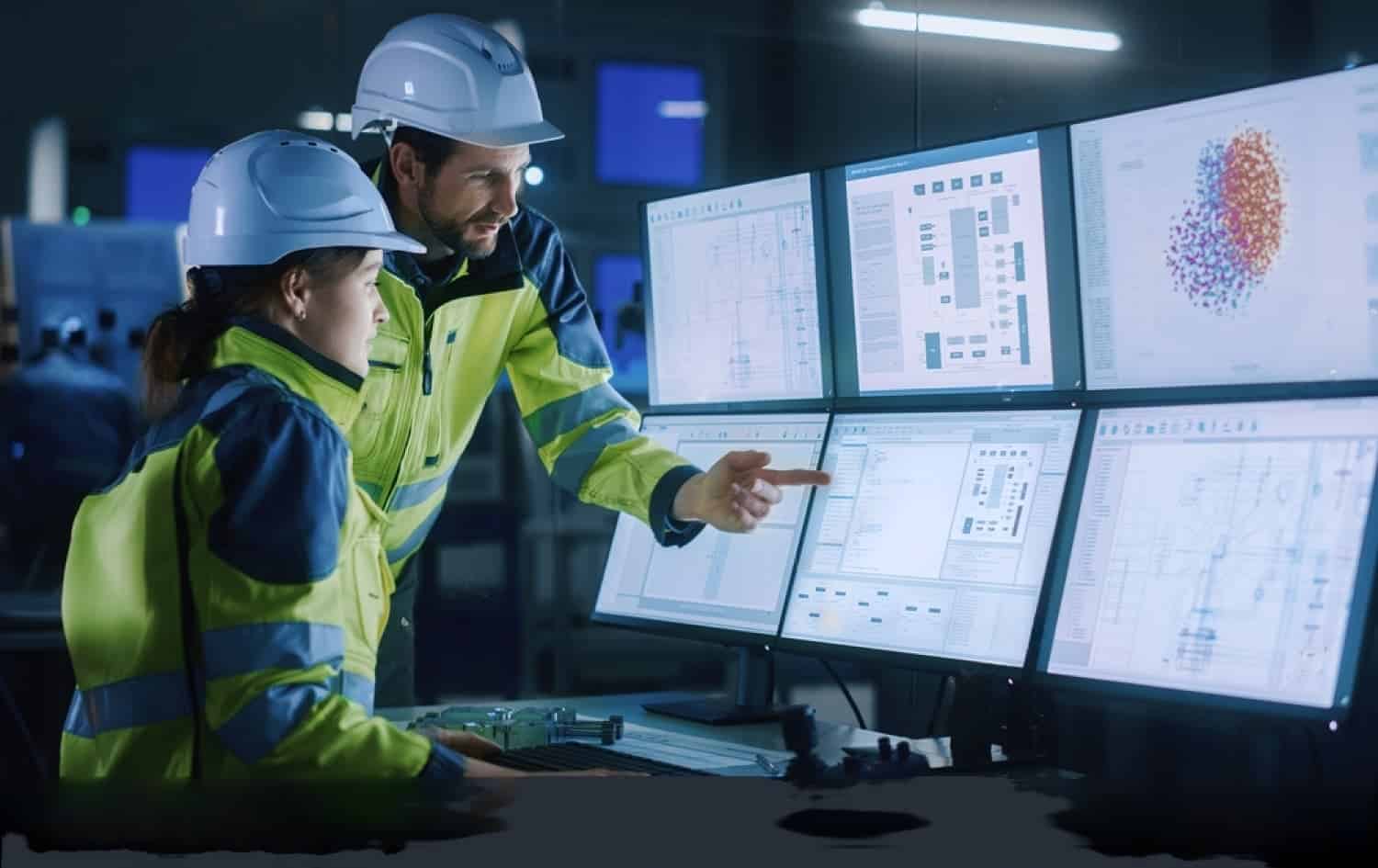
Optimizing the production tool is an essential element of the transition to industry 4.0. This step aims to maximize the efficiency, flexibility and productivity of manufacturing processes by strategically exploiting innovative technologies and concepts.
Here are 10 examples of key industry 4.0 tools that contribute to optimizing the production tool:
- The Industrial Internet of Things (IIoT): The IIoT allows machines and equipment to monitor, communicate and share data in real time. Thanks to the collection and analysis of data from sensors and connected devices, manufacturers can optimize the performance of their machines, anticipate breakdowns and reduce unplanned downtime.
- Machine Learning (ML): The integration of ML into production processes improves decision-making by analyzing large volumes of data and identifying trends or patterns. This can lead to significant improvements in quality management, optimization of production parameters and waste reduction.
- Production management software (MES): MES (Manufacturing Execution System) systems make it possible to supervise and control production in real time, facilitating the planning, execution and monitoring of operations. This software contributes to better coordination between the different stages of production, thus reducing changeover times and improving resource utilization.
- The digital twin: The digital twin concept consists of creating a virtual replica of a physical object, whether a product, a machine or even an entire factory. This makes it possible to simulate production scenarios, test modifications before their actual implementation and optimize design and processes. They also make it possible to experiment with energy efficiency scenarios without disrupting actual production.
- Augmented Reality (AR) has many applications in industry 4.0, including operator training, computer-assisted maintenance and real-time data visualization. It improves operational efficiency by providing contextual information directly to workers in the field.
- Cloud Computing: Cloud services offer a flexible infrastructure for data storage and processing, which allows companies to quickly access the resources needed to optimize operations. Data can be shared and analyzed from various facilities, thus fostering collaboration and innovation.
- Collaborative robotics: Collaborative robots, also called cobots, work in collaboration with humans in a production environment. They can perform repetitive, dangerous or precision-demanding tasks, thus freeing workers for more complex and creative tasks.
- 3D printing: 3D printing is revolutionizing manufacturing by enabling the creation of complex parts quickly and efficiently. This technology offers great flexibility in the design and production of prototypes, custom components and spare parts, which can help reduce production lead times and costs.
- Advanced data analytics: Advanced data analytics, also known as industrial analytics, makes it possible to draw valuable insights from the data generated by machines and production processes. By using sophisticated algorithms, manufacturers can identify trends, anomalies and optimization opportunities, leading to better decision-making and continuous improvement.
- Cyber-physical systems (CPS): CPS are systems integrating computing, communication and control components with the physical world. They allow real-time interaction between equipment, sensors and actuators, thus creating intelligent and responsive production environments. CPS foster automated decision-making and dynamic adjustment of processes to optimize performance.
By implementing these tools synergistically, companies can create more agile, adaptable and high-performing production environments. Optimizing the production tool within the framework of industry 4.0 makes it possible to effectively meet the challenges of competitiveness, product personalization and customer satisfaction, while fully exploiting the potential of digital and connected technologies.
VIII] Improving energy efficiency
Energy efficiency plays a crucial role in the context of industry 4.0, where data plays an essential role in the transformation and optimization of industrial operations.
Industrial companies face the challenge of reducing their energy consumption while maintaining high production levels and meeting environmental objectives. Fortunately, advances in industry 4.0 offer new opportunities to significantly improve energy efficiency.
The use of massive data collected from sensors and connected devices is at the heart of this transformation. Data is collected in real time, interpreted using advanced analysis tools and integrated into predictive models. This makes it possible to identify bottlenecks and inefficiencies in production processes, and to make adjustments to minimize energy consumption.
The advantages of this approach are many, and here are a few examples:
- Detecting inefficient processes: Data makes it possible to identify production processes that consume a disproportionate amount of energy relative to the results obtained. By better understanding these energy bottlenecks, companies can make targeted improvements to reduce their consumption.
- Optimizing production and logistics: Real-time data allows companies to monitor and optimize production according to variations in demand, environmental conditions and energy costs. This may involve adjustments in planning, logistics and resource use to minimize energy consumption.
- Predictive maintenance: Data can be used to anticipate equipment maintenance needs. By predicting potential breakdowns, companies can avoid unplanned downtime, which contributes to more efficient energy use.
- Dynamic demand management: Data makes it possible to adjust energy demand according to fluctuations in prices and electricity availability. This may involve shifting energy-intensive processes to periods when energy is cheaper and more abundant.
- Optimizing the consumption of energy and raw materials: Industry 4.0 offers the possibility of having an overall view of the factory and its equipment thanks to the interconnection of systems. This visibility enables better management and optimization of the consumption of energy and raw materials. Companies can adjust production processes in real time to maximize energy efficiency and minimize losses. This intelligent optimization of resources helps reduce costs and mitigate the environmental impact of production.
- Logistics optimization: Industry 4.0 enables better logistics management thanks to the interconnection of all links in the production chain, made possible by IoT. Algorithms can calculate optimal delivery routes to avoid congestion, interruptions and delays, thus improving the flow of goods. This logistics optimization helps reduce inefficiencies, decrease waiting times and minimize the energy consumption associated with the transport and distribution of products.
By adopting these data-centered approaches, industrial companies can considerably reduce their energy consumption while improving their operational efficiency. This evolution towards smarter and more efficient energy management is a concrete example of how industry 4.0 is transforming the way companies approach energy and environmental challenges.
Industry 4.0 is emerging as a true revolution in the manufacturing sector, guided by the strategic adoption of digital technologies, advanced automation and intelligent connectivity. This transformation has been characterized by the integration of the internet and digital into production and management processes.
Energy efficiency is one of the major benefits of Industry 4.0, allowing companies to reduce their energy consumption, minimize their carbon footprint and contribute to the fight against climate change. Thanks to real-time data analysis, predictive maintenance and resource optimization, companies can improve their operational performance while reducing their environmental impact.
However, as Industry 4.0 continues to take shape, new prospects are emerging on the horizon. Industry 5.0 is already taking shape as an even deeper evolution, introducing the concept of strengthened collaboration between human and machine.
While the fourth industrial revolution marked the beginning of automation and digitization, the fifth revolution goes further by integrating the unique capabilities of humans, such as creativity, critical thinking and adaptability.
Industry 5.0 places workers at the heart of the production process, considering them not only as a resource, but as a valuable investment.
Technology is seen as a tool to improve and support human work, rather than replace it.
Looking to the future, Industry 5.0 paves the way for a new era of human-machine collaboration and industrial progress. It offers the promise of a strengthened symbiosis between technology and humans, thus creating unlimited potential for significant advances in the fields of production, energy efficiency and sustainability.


